|
|
Author: Mike Wastewater Treatment Engineer Water Treatment Expert Time: April 21, 2026 Introduction: I'm Mike. I've been deeply engaged in the field of wastewater treatment and environmental protection equipment for a long time, with extensive front-line experience. I focus on engineering implementation and operation optimization, sharing practical and applicable industry insights. |

Introduction to Low-Speed Mixers
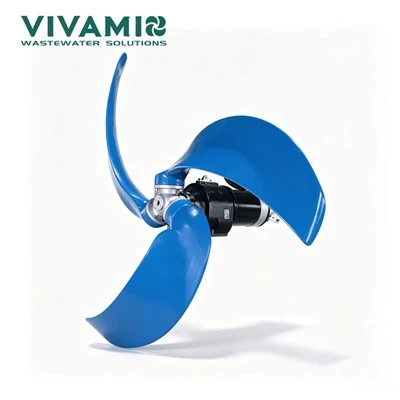
A low-speed mixer is engineered to deliver high torque at low rotational speeds, ensuring stable and energy-efficient mixing performance in demanding environments such as wastewater treatment systems.
Core Components
Built with a motor, gearbox, shaft, and impeller to ensure reliable and continuous mixing performance.
High Torque Output
The gearbox reduces speed while increasing torque, providing powerful flow pushing and uniform mixing.
Durable Design
Equipped with mechanical seals and protection systems for long-term operation in harsh wastewater conditions.
Low-speed mixers provide stable mixing without damaging floc structure, making them essential for biological wastewater treatment processes.
The Difference Between Low-Speed Mixers and Ordinary Mixers
Understanding the differences helps you choose the right mixing solution for your application, whether it's wastewater treatment or industrial processing.
Low-Speed Mixers
- Speed: Low (tens to ~100+ RPM)
- Torque: High torque with gearbox
- Mixing Type: Gentle, low shear
- Function: Flow circulation & uniform mixing
- Best For: Large tanks & wastewater systems
- Applications: Anoxic & anaerobic tanks
Conventional Mixers
- Speed: High (hundreds to thousands RPM)
- Torque: Lower torque
- Mixing Type: High shear mixing
- Function: Rapid mixing & dispersion
- Best For: Chemical & pharmaceutical use
- Applications: Dissolution & emulsification
If your goal is stable flow, low energy consumption, and floc protection in wastewater treatment, low-speed mixers are the preferred choice. For rapid blending or chemical reactions, conventional mixers are more suitable.
Application Scenarios for Low-Speed Mixers


Advantages of low-speed mixers

Low shear force: Does not easily break flocs, suitable for wastewater treatment processes
High thrust / large circulation: Ensures wide-area flow and uniform mixing
Energy-efficient: Operates at low speed with relatively low power consumption
Stable operation: Equipped with a gearbox for smooth and low-vibration running
Strong adaptability: Suitable for large tanks, low-viscosity, and sediment-prone media
Low maintenance cost: Simple structure, low failure rate, and long service life
Low Speed Mixer Export Project Case Study

In this low-speed mixer export project, the equipment is used for cattle farm wastewater with sand content. It improves circulation and reduces sedimentation through strong thrust and uniform mixing. The stable performance has been well recognized, leading to multiple repeat orders.
Need a Reliable Submersible Mixer?
Get expert advice, customized solutions, and competitive pricing for your wastewater treatment project.