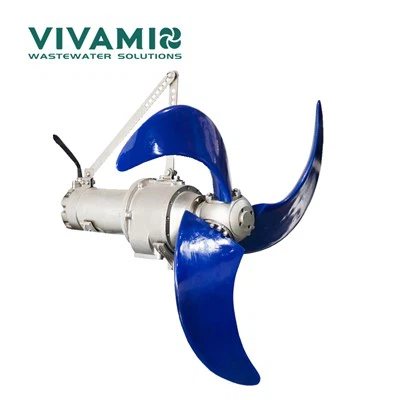
Wastewater Grinder for Sewage and Industrial Wastewater Treatment

The LK-FGS Wastewater Grinder is designed to reduce troublesome solids in sewage and industrial wastewater before they reach pumps, pipelines, valves, and downstream treatment equipment.
Installed directly in an open wastewater channel, the grinder uses a low-speed cutting mechanism to capture and reduce materials such as rags, wipes, fibers, plastics, and other debris that can cause clogging or equipment failure.
With multiple configurations available for different channel sizes and flow requirements, the LK-FGS provides a practical wastewater solids reduction solution for municipal wastewater treatment plants, sewage pumping stations, industrial wastewater facilities, and other applications where reliable pump protection is required.
Key Features
Reliable Wastewater Solids Reduction
The cutting system is designed to continuously reduce fibrous and bulky wastewater solids into smaller pieces, helping them pass through the downstream system more easily.
Typical materials include:
- Wet wipes
- Rags and cloth
- Fibrous materials
- Plastics
- Hair and stringy debris
- Organic waste
-
General sewage solids
The wastewater grinder helps reduce the risk of solids accumulating around pump impellers, valves, and pipelines.

Low-Speed, High-Torque Cutting
The LK-FGS uses a low-speed, high-torque grinding principle to provide strong cutting force without relying on high rotational speed.
This operating principle is especially suitable for long, flexible, and stringy materials such as wipes, cloth, and fibers that may wrap around conventional sewage pump impellers.
The low-speed operation also supports stable performance under changing wastewater conditions.


Protect Pumps and Downstream Equipment
Large and fibrous solids in wastewater can cause:
-
Pump impeller clogging
-
Pipeline blockage
-
Valve obstruction
-
Frequent shutdowns
-
Increased manual cleaning
-
Higher maintenance requirements
Installing a sewage grinder upstream helps reduce these materials before they reach sensitive equipment.
This makes the LK-FGS particularly suitable for sewage pumping stations, wastewater treatment plant inlet systems, and industrial wastewater pretreatment.

How Does a Wastewater Grinder Work?
Wastewater flows through the grinder installed in the channel.
As larger solids approach the unit, they are directed toward the cutting area. The rotating cutting elements capture and shear the solids into smaller particles while allowing wastewater to continue flowing through the system.
Wastewater with Solids → Solids Captured → Cutting and Grinding → Reduced Solids Continue Downstream
Unlike a conventional bar screen, the wastewater grinder does not primarily remove solids from the wastewater. Instead, it reduces their size to minimize the risk of downstream blockage.
Available Wastewater Grinder Configurations
Different wastewater systems require different flow capacities and channel arrangements.
The LK-FGS series is available in several configurations to suit different wastewater treatment conditions.
Drumless Grinder Screen
The drumless configuration is suitable for smaller wastewater channels and relatively lower flow applications.
Typical applications include: Small sewage pumping stations; Commercial wastewater systems; Small wastewater treatment plants; Local sewage collection systems. Available flow capacities range approximately from 30 to 240 m³/h, depending on the selected model.
Single Drum Grinder Screen
The Single Drum Grinder Screen provides a larger effective flow area and is suitable for medium-capacity wastewater applications. Typical flow capacities range from approximately 450 to 850 m³/h. This configuration is suitable for municipal and industrial wastewater systems requiring higher hydraulic capacity while maintaining a relatively compact installation size.
Double Drum Grinder Screen
The Double Drum Grinder Screen is designed for high-flow wastewater channels.
Its larger screening and flow-through area makes it suitable for: Municipal sewage pumping stations; Large WWTP inlet channels; High-flow industrial wastewater systems; Combined sewage and stormwater pumping stations. Depending on channel dimensions and blade height, available capacities can reach approximately 21,000 m³/h.
Wastewater Grinder Technical Data
|
Parameter |
Available Options |
|
Product |
Wastewater Grinder |
|
Series |
LK-FGS |
|
Installation |
Open Channel |
|
Configuration |
Drumless / Single Drum / Double Drum |
|
Cutting Principle |
Low-Speed Solids Reduction |
|
Flow Capacity |
Approx. 30–21,000 m³/h |
|
Blade Height |
Approx. 100–1,800 mm |
|
Motor Power |
Approx. 1.5–11 kW |
|
Front Width |
Model Dependent |
|
Side Width |
Model Dependent |
|
Application |
Sewage / Industrial Wastewater |
|
Voltage |
Customized according to project requirements |
Actual model selection should be based on wastewater flow, channel dimensions, water depth, solids characteristics, and operating conditions.
Wastewater Grinder Applications
Sewage Pumping Stations
Wet wipes, rags, plastics, and fibrous materials are common causes of sewage pump clogging. Installing a pump station wastewater grinder before the pump can reduce these solids before they reach the impeller.
Wastewater Treatment Plant Headworks
The LK-FGS can be installed at the front end of a wastewater treatment plant to reduce large and fibrous solids before downstream treatment processes. It can be used as part of a wastewater pretreatment system to improve the operating conditions of pumps, valves, and other equipment.
Industrial Wastewater Treatment
The industrial wastewater grinder can be used where process wastewater contains fibrous, flexible, or bulky solids that are difficult for conventional pumps to handle.
Typical industries include:
-
Food processing
-
Slaughterhouses
-
Papermaking
-
Manufacturing wastewater
-
Commercial wastewater
Different grinder configurations can be selected according to wastewater characteristics and solids loading.
Hospitals, Hotels and Commercial Facilities
Commercial wastewater may contain wipes, sanitary materials, cloth fibers, plastics, and other debris. A sewage grinder machine can help reduce these materials before they enter pumping and treatment systems.
Combined Sewage and Stormwater Pumping Stations
During high-flow periods, wastewater systems may receive large amounts of debris. High-capacity open channel wastewater grinders can provide continuous solids reduction while maintaining sufficient hydraulic flow through the channel.
Why Choose the LK-FGS Wastewater Grinder?
Wide Flow Capacity Range: Models are available for small wastewater systems as well as high-capacity municipal channels.
Multiple Structural Configurations: Drumless, single-drum, and double-drum configurations can be selected according to channel dimensions and hydraulic requirements.
Strong Anti-Clogging Performance: The grinder reduces wipes, rags, fibers, and similar solids before they reach downstream pumps.
Suitable for Continuous Wastewater Operation: The equipment is designed for continuous wastewater pretreatment and pump protection.
Customized Model Selection: Flow capacity, channel dimensions, blade height, motor power, and electrical configuration can be selected according to project requirements.
How to Select a Wastewater Grinder
For accurate model selection, please provide the following project information:
1. Normal wastewater flow rate
2. Maximum flow rate
3. Channel width
4. Channel depth
5. Normal water depth
6. Type of wastewater
7. Main solids in the wastewater
8. Approximate solids size
9. Required equipment material
10. Voltage and frequency
Based on these parameters, the suitable wastewater grinder model, blade height, motor power, and configuration can be recommended.
Hot Tags: lk-fgs wastewater grinder, China lk-fgs wastewater grinder manufacturers, suppliers, factory, chipper grinder screen, grinder screen OEM, grinder screen panel, industrial grinder screen, metal grinder screen, pulverizer screen