|
|
Author: Mike Wastewater Treatment Engineer Water Treatment Expert Time: Sep 17, 2025 Introduction: I'm Mike, I've been deeply engaged in the field of wastewater treatment and environmental protection equipment for a long time, with extensive front-line experience. I focus on engineering implementation and operation optimization, sharing practical and applicable industry insights. |

What is a Mechanical Aerator System?
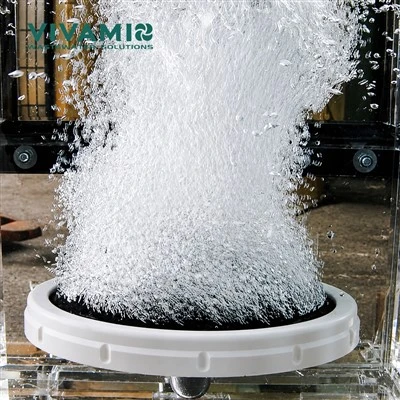
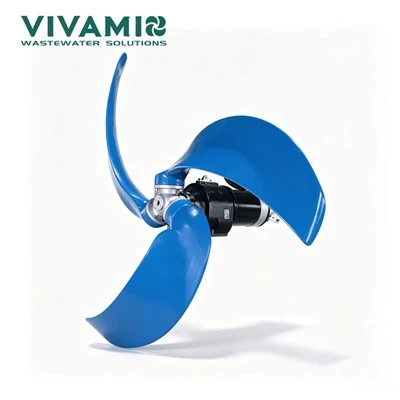
In the field of wastewater treatment, aeration is a critical process. A Mechanical Aerator System uses mechanical devices such as pumps, impellers, brushes, and floating units to efficiently deliver oxygen from the air into the water. It plays a vital role in oxygen supply, water mixing, and water quality improvement, preventing sludge sedimentation and ensuring uniform water quality throughout the tank. The main types of mechanical aeration equipment on the market include Aspirating Aerators, Surface Aerators, Submersible Aerator Pumps, and Submersible Jet Aerator Pumps. By selecting the appropriate type according to water depth, water quality, and treatment process, wastewater treatment plants can achieve efficient oxygen transfer and effective mixing.
How Does a Mechanical Aerator System Work?
A Mechanical Aerator uses a motor to drive impellers or brushes at high speed, drawing air into the water to form bubbles. This process increases dissolved oxygen, ensures uniform water circulation, reduces dead zones and sedimentation, and enhances microbial degradation efficiency. Most mechanical aeration equipment features a modular design, making installation simple, and the required number of units can be calculated to achieve even aeration throughout tanks or lagoons in wastewater treatment applications.
For example, with our VIVAMIX series of Mechanical Aerator products:
Power Drive
The system is driven by a motor or power unit that rotates impellers, brushes, or jet devices at high speed. The mechanical energy from the motor is transferred to the water, creating upward, rotational, or splashing flow.
Air Entrainment
Under mechanical action, air is mixed, drawn in, or injected into the water, forming bubbles. These bubbles rise through the water, dissolving oxygen and providing the necessary oxygen for microbial metabolism.
Water Circulation and Mixing
A mechanical aerator not only increases dissolved oxygen but also circulates water to reduce sediment at the bottom and eliminate dead zones. Uniform water flow ensures sufficient contact between microorganisms and pollutants, improving treatment efficiency.
Oxygen Transfer and Pollutant Degradation
Dissolved oxygen is absorbed by microorganisms, participating in the degradation of organic matter and ammonia nitrogen. Aeration efficiency depends on bubble size, rotation speed, water depth, impeller type, and tank shape.
System Components
Impellers or Brushes: Provide mixing force and oxygen transfer power.
Motor or Power Unit: Drives the rotation of impellers.
Floats or Mounting Brackets: Fix the equipment and adapt to water level changes.
Control System (Optional): Adjusts speed and operating time for energy-efficient operation.
Factors to Consider When Choosing a Mechanical Aerator System for Wastewater Treatment Plants
In wastewater treatment plants, aeration systems are the core equipment for maintaining microbial activity and removing organic matter and ammonia nitrogen. Choosing the right mechanical aerator system not only affects treatment efficiency but also directly impacts operating costs and energy consumption. Therefore, it is essential to consider several key factors and understand the reasons behind each when selecting a system.
|
Wastewater Volume and Composition: Determining Aeration Requirements |
|---|
|
How to Consider: Evaluate the daily treatment flow, wastewater concentration, and the levels of organic matter and ammonia nitrogen. |
|
Why It Matters: Tanks with high wastewater volume or high organic load require equipment with higher power and oxygen transfer efficiency to ensure sufficient dissolved oxygen and maintain microbial activity. |
|
Tank Size and Water Depth: Matching the Equipment Type |
|---|
|
How to Consider: Measure the tank's length, width, and depth to determine the optimal aerator layout. |
|
Why It Matters: Water depth affects oxygen transfer efficiency and mixing performance. Shallow tanks are suitable for surface or floating aerators, while deeper tanks are better served by jet or impeller aerators to prevent dead zones and sedimentation. |
|
Operational Efficiency and Energy Consumption: Optimizing Long-Term Costs |
|---|
|
How to Consider: Choose mechanical aerators with high oxygen transfer efficiency and low energy consumption, and consider adjustable load capabilities. |
|
Why It Matters: Efficient equipment provides sufficient oxygen while reducing electricity usage, lowering the cost per unit of dissolved oxygen, and improving overall economic performance. |
|
Maintenance Convenience and Reliability: Reducing Operational Risks |
|---|
|
How to Consider: Assess maintenance frequency, wear parts, replacement difficulty, and ease of operation. |
|
Why It Matters: Easy-to-maintain equipment minimizes downtime and repair costs, ensuring long-term stable operation of the wastewater treatment plant. |
|
Capital and Operating Costs: Balancing Investment and Economic Efficiency |
|---|
|
How to Consider: Compare equipment purchase and installation costs, as well as energy consumption and maintenance expenses during operation. |
|
Why It Matters: Choosing high-quality, energy-efficient mechanical aerator systems ensures treatment efficiency while maximizing long-term economic benefits. |
Conclusion: Choosing the right mechanical aerator system is not only about meeting water treatment requirements but also about balancing energy consumption, maintenance, and economic efficiency. By understanding how to consider each factor and the reasons behind it, wastewater treatment plants can make informed decisions, ensuring that equipment operates efficiently, saves energy, and runs reliably over the long term.
How to Choose the Right Mechanical Aerator System?
As a manufacturer and wholesaler with 10 years of experience in wastewater treatment mixing and mechanical aerator equipment, we always use a scientific approach. By combining calculations with on-site data, we help clients select the most cost-effective aeration products. In our project experience, we first evaluate the daily wastewater flow and water quality characteristics, such as organic matter and ammonia nitrogen concentrations, which determine the required aerator power and air supply. Next, we consider the tank or lagoon size and depth, choosing the most suitable equipment type and layout to ensure uniform water circulation and reduce dead zones.
Click below to explore our VIVAMIX Mechanical Aerator products. In the next section, we will use real calculation cases to guide you in selecting the right model


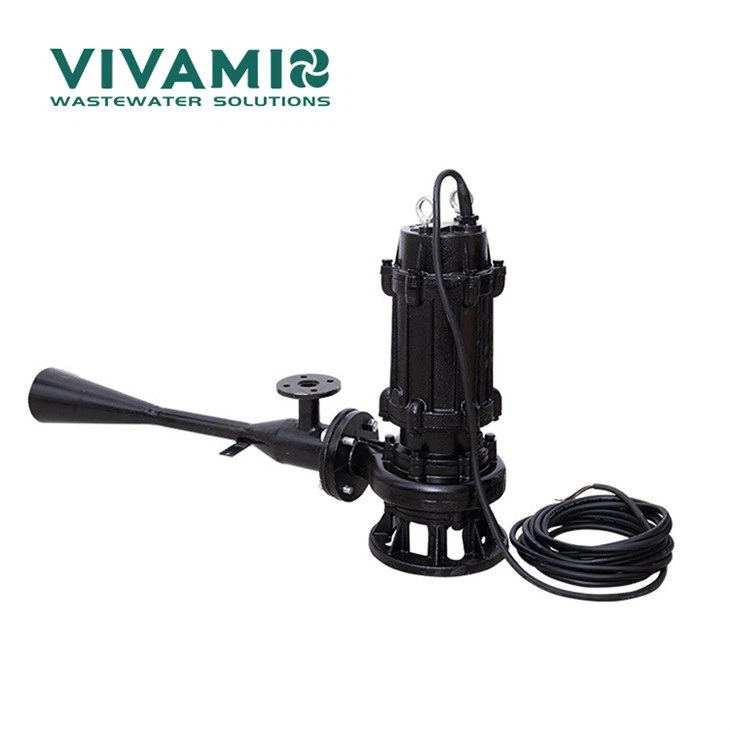
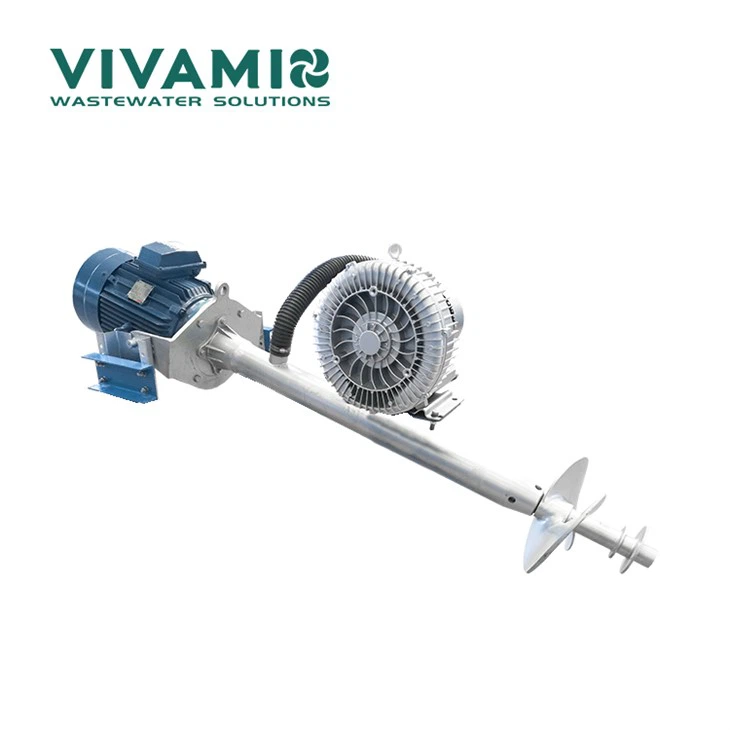
Next, we will provide selection guidance through example calculations.
Aerator Power Calculation Formula (Example)

Explanation:
P - Required aerator power (kW)
Q - Daily wastewater flow (m³/day)
 -- Oxygen Requirement per Cubic Meter of Water (kg O₂/m³)
E -- Aerator Oxygen Transfer Efficiency (kg O₂/kWh)
24- Convert Daily Treatment Flow to Hourly Oxygen Supply
Example: Using Our VM-FB Series Surface Aerator
Assumptions:
Daily treatment flow Q = 1000 m³/day
Oxygen demand per cubic meter DOreq = 2 kg O₂/m³
Surface Aerator Oxygen Transfer Efficiency: E = 2 kg O₂/kWh
Substitute into the Formula:

Required Total Power: The system needs approximately 42 kW of Surface Aerators. If each unit has a power of 7.5 kW, around 6 units are required.
For us, a Mechanical Aerator is not just an oxygen supply device-it is the "heart" of a stable wastewater treatment system. There is no one-size-fits-all solution for selecting an aerator; the choice must consider tank type, treatment process, water quality, and investment cost together.