introduction
Biological wastewater treatment relies heavily on the efficiency of its aeration systems. For industrial and municipal treatment plants alike, achieving thorough organic pollutant degradation requires a consistent, reliable supply of dissolved oxygen. The choice of your aeration equipment directly dictates both your system's biological performance and its monthly utility bills.
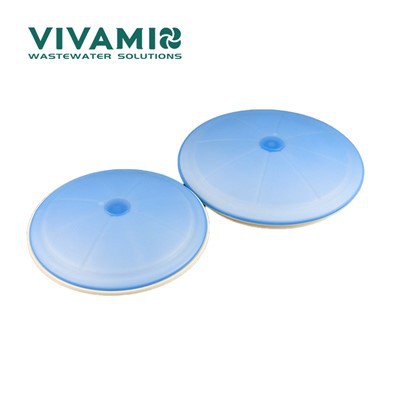
The Fine Bubble Disc Diffuser for Wastewater Treatment represents the industry-standard solution for sub-surface aeration. By refining how compressed air is introduced into biological basins, these components optimize oxygen mass transfer while minimizing energy consumption.
What is a Fine Bubble Disc Diffuser?
Definition and Core Role in Wastewater Treatment
A Fine Bubble Disc Diffuser for Wastewater Treatment is a specialized subsurface aeration device engineered to inject compressed air into biological treatment reactors, such as activated sludge basins, sequencing batch reactors (SBR), and membrane bioreactors (MBR). The primary function of the disc diffuser is to break down large volumes of air supplied by blowers into millions of micro-bubbles. These bubbles are released from the floor of the tank, ascending through the mixed liquor to provide the continuous dissolved oxygen (DO) required by aerobic microorganisms to metabolize organic waste matter.
Why Fine Bubbles Matter: The Science of Gas-Liquid Transfer
In wastewater engineering, the rate of oxygen transfer is governed by the contact surface area between air and water. Traditional coarse bubble diffusers create large air pockets that rise rapidly, resulting in minimal contact time and low standard oxygen transfer efficiency (SOTE).
Conversely, a high-quality microporous membrane diffuser creates a dense plume of fine bubbles ranging from 1mm to 3mm in diameter. These tiny bubbles dramatically increase the cumulative surface area per unit volume of air. Because smaller bubbles exhibit a lower buoyant rise velocity, their retention time within the liquid column is significantly extended. This maximized gas-liquid contact yields exceptional oxygen transfer rates, allowing treatment facilities to meet their DO targets using considerably less blower horsepower, directly translating into lower operational costs.
How Does a Disc Diffuser Work? (Working Principle)
The disc diffuser operates through a precise aeration mechanism that converts compressed air into uniform fine bubbles, ensuring high oxygen transfer efficiency in wastewater treatment systems.
1. Air Compression & Delivery
High-efficiency blowers generate low-pressure compressed air and deliver it through a submerged pipeline network installed at the tank bottom.
2. Air Distribution in Diffuser Base
Air enters the ABS diffuser housing, where it is evenly distributed beneath the elastomer membrane to ensure stable aeration performance.
3. Membrane Opening Process
When internal air pressure exceeds water depth pressure, the micro-slits on the EPDM or Silicone membrane gradually open.
4. Fine Bubble Generation
Air is released through 80–100 μm micro-apertures, forming 1–3 mm fine bubbles that rise slowly and maximize oxygen transfer efficiency.
Adaptive Performance in Intermittent Aeration Systems
In SBR and cyclic aerobic/anoxic systems, aeration is not continuous. The disc diffuser membrane expands during operation and automatically collapses when air stops, sealing micro-slits to prevent backflow and system contamination.
This adaptive working principle ensures stable oxygen transfer, energy efficiency, and long service life in modern wastewater treatment plants.
Key Features & Technological Advancements of VIVAMIX VM-BP Series
Advanced structural engineering designed to eliminate membrane failure, clogging risks, and piping instability in industrial wastewater aeration systems.
Reverse Folding Structure
Eliminates membrane detachment by embedding the elastomer edge into a recessed ABS groove. Internal pressure increases sealing force, ensuring zero leakage under extreme airflow conditions.
Anti-Clogging Non-Return Design
A thickened central rubber zone acts as a mechanical seal during shutdown, preventing sludge backflow and eliminating diffuser pipe clogging risks.
Reinforced Pipe Connector
Heavy-duty base connector resists vibration, torque, and long-term hydraulic stress, ensuring stable installation and extended service life in harsh environments.
Material Selection Guide: EPDM vs. Silicone Membranes
The performance and service life of a Fine Bubble Disc Diffuser depends significantly on selecting the correct membrane material based on wastewater composition, chemical load, and operating temperature. VIVAMIX offers two premium elastomer solutions for different industrial conditions.
Premium EPDM Membrane
Designed for municipal and standard industrial wastewater applications, EPDM membranes offer excellent durability, elasticity, and long-term resistance to oxidation, ozone, and UV exposure.
Best Suited For: Municipal sewage plants, food & beverage processing, textile printing, paper mills, and mild chemical wastewater.
Thermal Limit: Up to 80°C under continuous operation.
Advanced Silicone Membrane
For extreme industrial environments, Silicone membranes provide superior chemical stability, zero plasticizer formulation, and strong resistance to oil absorption and scaling.
Best Suited For: Petrochemical plants, coal chemical processing, pharmaceutical wastewater, high salinity effluents, and high-organic-load industrial wastewater.
Thermal Limit: Up to 100°C continuous high-temperature operation.
Selecting the correct membrane material ensures stable oxygen transfer efficiency, longer service life, and reduced maintenance costs in wastewater treatment systems.
Technical Specifications of VM-BP Disc Diffuser Series
To assist project engineers with precise system design and hydraulic calculation, the technical parameters of the VIVAMIX VM-BP fine bubble disc diffuser range are detailed below:
| Material Combination | ABS+EPDM | ABS+Silicone | ||||
| Specifications | D200 | D260 | D300 | D200 | D260 | D300 |
| Outer diameter (mm) | 215 | 280 | 330 | 218 | 280 | 330 |
| Membrane diameter(mm) | 192 | 225 | 330 | 192 | 225 | 330 |
| Membrane thickness(mm) | 2 | 2 | 2 | 2 | 2 | 2 |
| Hole diameter(μm) | 80-100 | |||||
| Bubble diameters(mm) | 1~3 | |||||
| Air flow range (Nm3/h) | 1~2.5 | 1~4 | 1~6 | 1~3 | 1~3 | 1~3 |
|
Average air flow at 4m (Nm3/h) |
1.8 | 2.5 | 4 | 1.8 | 2.5 | 4 |
| Max. Working temperature(℃) | 80 | 100 | ||||
The Science of Sludge Protection
Crucially, the 80–100 $\mu$m microporous matrix is optimized to balance intense gas distribution with fluid safety. The gentle release of 1–3mm micro-bubbles generates low localized shear stress. In active biological basins, high fluid shear forces can tear apart fragile bacterial flocs. By minimizing this localized shear damage, the VM-BP series protects the structural integrity of your activated sludge, maintaining high settling characteristics and ensuring optimum chemical oxygen demand (COD) and biochemical oxygen demand (BOD) removal rates.
Installation, Operation, and Maintenance (O&M) Guide
Proper installation and routine maintenance help the VIVAMIX VM-BP Series disc diffuser achieve uniform aeration, stable airflow, and long-term anti-clogging performance.
Proper Piping Layout
To ensure full tank coverage and avoid dead zones, the air distribution pipes should be installed horizontally and evenly across the tank floor.
- Install diffuser discs horizontally on lateral pipes.
- Use reinforced thread adapters for secure connection.
- Clean all pipe debris, plastic shavings, and dirt before installation.
- Keep the submerged pipe grid level tolerance within ±6 mm.
Routine Maintenance & Cleaning
The VM-BP Series is designed for low-maintenance operation. Periodic cleaning may be required depending on water hardness, biological conditions, or calcium scaling.
- Increase airflow to the maximum design limit for 15–20 minutes to remove loose bio-sludge.
- Use diluted formic acid cleaning for calcium carbonate scaling when required.
- The zero-return sealing design helps prevent sludge backflow.
- In-tank cleaning can be completed without draining the basin.
Frequently Asked Questions (FAQ) for Aeration Project Engineers
Q1: How do I choose between EPDM and Silicone membranes for a fine bubble disc diffuser?
The selection depends primarily on wastewater chemistry and temperature. For municipal treatment plants, standard domestic sewage, and typical light industrial wastewater below 80°C, premium EPDM offers excellent elasticity and long-term cost-effectiveness. If the wastewater contains hydrocarbon solvents, petrochemical discharge, heavy industrial chemicals, or operates between 80°C and 100°C, Silicone membrane is recommended for better chemical stability and thermal resistance.
Q2: What causes membrane detachment in regular diffusers, and how does VIVAMIX solve it?
Membrane detachment is usually caused by air pressure surges from blowers or long-term material stretching, which may cause the membrane edge to slip out from standard flat retaining clamps. VIVAMIX solves this with a reverse folding structure. The membrane edge is turned inward and mechanically locked into a heavy-duty ABS slot. As air pressure increases, the membrane is pressed more firmly into the locking channel, creating a self-reinforcing seal that helps prevent detachment.
Q3: Can this fine bubble disc diffuser be used in intermittent aeration processes like SBR?
Yes. The VM-BP Series is suitable for intermittent aeration processes such as Sequencing Batch Reactors, also known as SBR systems. When airflow stops, hydrostatic pressure presses the thick, unperforated center area of the membrane against the solid ABS support disc. This creates a physical sealing barrier that helps block water and suspended sludge from flowing back into the air pipe network, ensuring easier restart when the blowers resume operation.
Q4: What is the average service life of VIVAMIX microporous membranes under standard working conditions?
Under recommended municipal operating conditions, correct piping design, and routine air purging, the VIVAMIX premium EPDM membrane can achieve an average service life of 5 to 8 years. For challenging high-temperature or chemical wastewater applications, Silicone membranes typically offer a service life of 3 to 5 years, depending on water quality, operating temperature, airflow control, and maintenance conditions.
Hot Tags: EPDM Silicone Membrane Fine Bubble Disc Diffuser, China EPDM Silicone Membrane Fine Bubble Disc Diffuser manufacturers, suppliers, factory, hydroponic air diffuser, air diffuser for aeration tank, fine bubble aeration, fine bubble diffuser for stp, bubble diffuser, septic tank aerator diffuser