|
|
Author: Mike Wastewater Treatment Engineer Water Treatment Expert Time: May 26, 2026 Introduction: I'm Mike. I've been deeply engaged in the field of wastewater treatment and environmental protection equipment for a long time, with extensive front-line experience. I focus on engineering implementation and operation optimization, sharing practical and applicable industry insights. |

Preface
Vertical mixer is a common mixing equipment with a vertical installation structure, mainly used to uniformly mix various powdery, granular, pasty or liquid materials. It is widely applied in industrial, agricultural and environmental protection fields, featuring simple structure, easy operation, and high mixing efficiency.
What Is a Vertical Mixer?
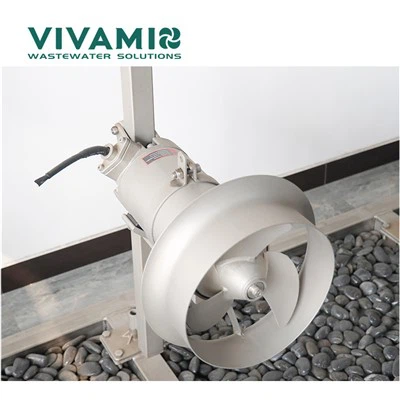
A vertical mixer is a mechanical device that drives the mixing impeller to rotate through a vertical motor, thereby stirring and mixing materials in a vertical tank. Its core advantage is that the vertical structure saves floor space, and the materials can be fully contacted and mixed under the action of the impeller.
How Does a Vertical Mixer Work?
The working principle of vertical mixer is simple and efficient:
-
Put the materials to be mixed into the mixing tank through the feeding port, ensuring that the material volume does not exceed the rated capacity of the tank.
-
Start the vertical motor, which drives the mixing impeller to rotate at a certain speed (adjustable according to material characteristics).
-
During the rotation of the impeller, the materials are pushed up, down, left and right, forming a strong turbulent flow and convection, so that various materials are fully contacted, collided and mixed.
-
After reaching the preset mixing time (usually a few minutes to tens of minutes), stop the motor and discharge the uniformly mixed materials through the unloading port.
Main Components of a Vertical Mixer
The structure of vertical mixer is simple and easy to maintain, with the following core components:
-
Vertical Motor: The power source, usually installed at the top or bottom of the equipment, provides stable power for the rotation of the impeller.
-
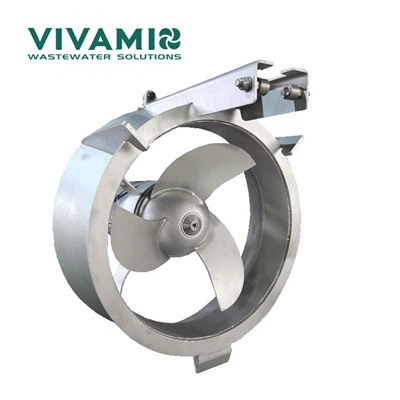
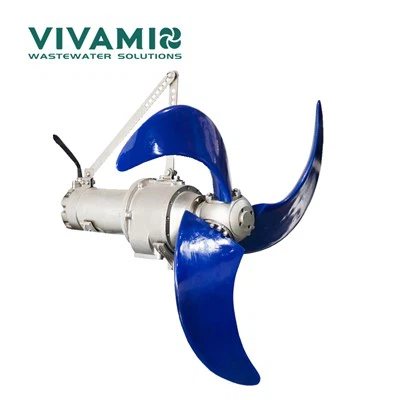
Mixing Impeller: The core working part, commonly designed as paddle type, spiral type or anchor type, which stirs materials to achieve uniform mixing.
-
Mixing Tank/Barrel: Used to hold materials, with different capacities (small to tens of liters, large to tens of cubic meters) to meet different production needs.
-
Feeding/Unloading Port: The feeding port is usually set at the top of the tank, and the unloading port is at the bottom, which is convenient for material input and output.
-
Support Frame: Used to fix the vertical mixer, ensuring the stability of the equipment during operation.

Main Function
- Space-Saving: Vertical structure, small floor area, suitable for workshops with limited space.
-
High Mixing Uniformity: The impeller design ensures that materials are stirred in multiple directions, with uniform mixing effect and no dead angle.
-
Easy Operation & Maintenance: Simple structure, few wearing parts, convenient daily operation and maintenance, low maintenance cost.
-
Strong Adaptability: It can mix various materials such as powder, granule, paste and liquid, and can be customized according to material characteristics.
-
Energy Saving: Reasonable impeller design and motor configuration, low energy consumption under the same mixing effect.
Common Application Scenarios
Vertical mixer is widely used in various industries due to its strong adaptability, mainly including:
- Environmental Protection: Mixing of sewage, sludge, chemical agents, etc., in wastewater treatment projects.
-
Agriculture: Mixing of feed, fertilizer, pesticide, etc., for livestock and poultry breeding.
-
Food Industry: Mixing of flour, seasonings, food additives, etc.
-
Chemical Industry: Mixing of chemical raw materials, pigments, coatings, etc.
-
Building Materials: Mixing of cement, sand, additives, etc., in building material production.
In summary, vertical mixer is a practical and efficient mixing equipment, which is characterized by space saving, uniform mixing, easy operation and wide application, and is an essential auxiliary equipment in many production and processing fields.